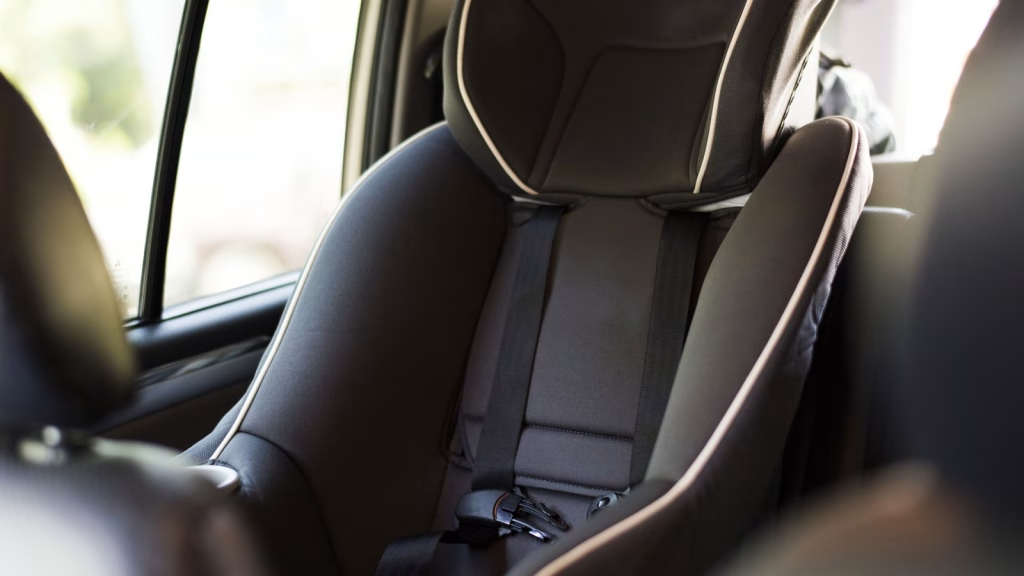
When you arrive with children and luggage, a child seat is essential booking information. The right seat must fit the child and the car. Asking about it before collection is easier than trying to solve a mismatch after a flight.
What does Spanish law require?
Under article 117 of Spain’s Road Traffic Regulation, in cars with up to nine seats, including the driver, a minor who is 135 cm tall or less must use an approved child restraint suited to their height and weight. Children in this group normally travel in the rear seats.
The regulation allows a front-seat exception only when the vehicle has no rear seats, every rear seat is already occupied by children who require restraints, or it is impossible to install all the required restraints in the rear. If a rear-facing restraint is used in the front and the car has a frontal airbag, that airbag must be deactivated. The seat must be installed according to its manufacturer’s instructions. The Spanish traffic authority, DGT, gives a practical explanation of these rules.
This is a height rule, not a rule that changes automatically on a child’s fourth or twelfth birthday. Tell the rental company the child’s height and weight as well as age, so it can check which seat is suitable. Do not choose a booster by age alone. The DGT also recommends continuing to use an appropriate child restraint until the child is taller than 150 cm.
Is ISOFIX necessary?
ISOFIX is a way of securing a compatible seat to a compatible vehicle. The word on a car listing does not tell you whether your particular seat fits a particular position. Check the child seat’s approval label and instructions, the car’s fitting points and any support leg or top-tether requirements. Ask the rental company to confirm the exact seat and seating position before pickup.
The DGT explains that the current European approval standard for new child seats is ECE R129, which uses the child’s height range. It also notes that R44 seats already in use can still be used, but since September 2024 they can no longer be sold. Follow the label and instructions of the actual seat you receive.
What should you confirm with the rental company?
Ask whether a suitable child seat or booster is available for your dates, which type will be supplied and whether there is a charge. Check how many seats can be reserved in one car and whether the seating positions fit your group. Get the arrangement in your booking confirmation rather than relying on a generic “child seats available” label.
For a group of six or seven, also ask whether the necessary restraints can be fitted in the proposed car while leaving enough space for everyone and their luggage. Confirm the fitting points and seat arrangement in the actual car before booking.
Send these details with your booking request
- Each child’s height, weight and age.
- How many child seats or boosters you need.
- Whether you will bring your own seat or use the rental company’s.
- The number of passengers, suitcases and pushchairs.
- Your pickup and return dates and locations.
Ask for the seat type, availability and any charge to be shown in your booking confirmation. At pickup, inspect the seat, check its label and instructions, and make sure it is installed securely before driving away.
Child seats with Family Car
Family Car provides child seats and boosters free of charge, up to two per booking. Give each child’s age and weight, and ideally height, in the booking form, and say how many seats you need. Planning outings with the children? See our day trips with kids from Orihuela Costa.
Legal sources checked on 9 October 2026: BOE, article 117 and the DGT child-seat guide.